
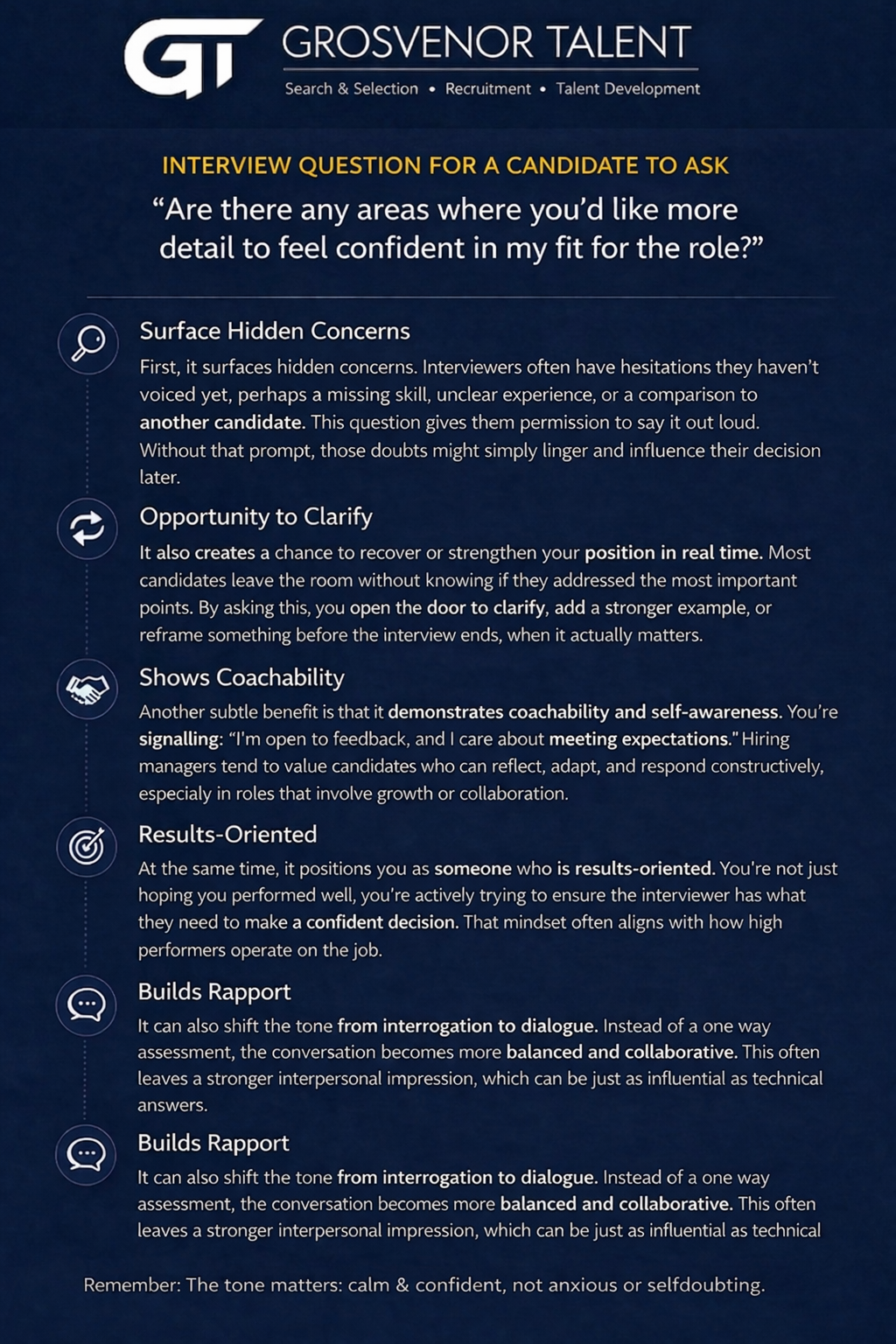
First, it surfaces hidden concerns. Interviewers often have hesitations they haven’t voiced yet, perhaps a missing skill, unclear experience, or a comparison to another candidate. This question gives them permission to say it out loud. Without that prompt, those doubts might simply linger and influence their decision later.
It also creates a chance to recover or strengthen your position in real time. Most candidates leave the room without knowing if they addressed the most important points. By asking this, you open the door to clarify, add a stronger example, or reframe something before the interview ends, when it actually matters.
Another subtle benefit is that it demonstrates coachability and self-awareness. You’re signalling: “I’m open to feedback, and I care about meeting expectations.” Hiring managers tend to value candidates who can reflect, adapt, and respond constructively, especially in roles that involve growth or collaboration.
At the same time, it positions you as someone who is results-oriented. You’re not just hoping you performed well, you’re actively trying to ensure the interviewer has what they need to make a confident decision. That mindset often aligns with how high performers operate on the job.
It can also shift the tone from interrogation to dialogue. Instead of a one-way assessment, the conversation becomes more balanced and collaborative. This often leaves a stronger interpersonal impression, which can be just as influential as technical answers.
Finally, it leaves a confident closing impression. Rather than ending passively, you’re taking ownership of how you’re perceived. Even if the interviewer has no concerns, they’ll often remember that you cared enough to check.
There is a small nuance to keep in mind: the tone matters. If delivered calmly and confidently, it feels professional and proactive. If it sounds anxious or overly self-doubting, it can have the opposite effect. The strength of the question comes from quiet confidence, not from seeking reassurance.